



Table of Content
Carry-On vs Personal Item: Airline Rules Explained

A carry-on bag is the larger cabin suitcase stored in the overhead bin, while a personal item is a smaller bag that must fit under the seat in front of you. Most airlines allow passengers to bring one of each.
However, many travelers are unsure which bags qualify for each category and how airline limits apply. This guide explains the key differences, typical size limits, and common airline rules.
What Is a Carry-On Bag?
A carry-on bag is the larger piece of luggage a passenger brings into the airplane cabin instead of checking it into the cargo hold. It is typically stored in the overhead bin above the passenger seats and must meet the airline’s carry-on size limits.
In airline baggage policies, a carry-on bag is different from a personal item. The carry-on is the primary cabin bag stored in the overhead compartment, while a personal item is a smaller bag kept under the seat in front of you.
What Is a Personal Item?
A personal item is a smaller bag passengers bring into the airplane cabin in addition to their carry-on bag. Unlike a carry-on bag, it must fit completely under the seat in front of the passenger.
Airlines usually define a personal item by storage location rather than strict dimensions. If a bag can be placed fully under the seat without blocking legroom, it is generally considered a personal item.
Typical examples include:
- backpacks
- purses
- laptop bags
- small tote bags
- briefcases
Carry-On vs Personal Item: Key Differences
Although both bags travel in the airplane cabin, airlines treat carry-on bags and personal items differently. The main differences involve size, storage location, and typical use during the flight.
Size Differences
A carry-on bag is the larger piece of cabin luggage and is designed to hold most of the items for a short trip. A personal item is smaller and must fit under the seat in front of the passenger.
Airlines usually publish a clear size limit for carry on luggage, while personal items are defined more loosely. In practice, the personal item must be small enough to fit completely under the seat and noticeably smaller than the carry-on bag.
Quick Comparison
|
Feature |
Carry-On Bag |
Personal Item |
|
Typical size |
Larger cabin luggage |
Smaller bag |
|
Storage location |
Overhead bin |
Under the seat |
|
Main purpose |
Primary travel luggage |
Small essentials |
|
Packing capacity |
Clothes, shoes, travel items |
Documents, electronics |
Storage Location on the Plane
The two bag types are stored in different areas of the aircraft cabin.
Carry-on bags are placed in the overhead compartments above the passenger seats. Because this space is shared by multiple passengers, airlines enforce carry-on size limits to ensure that bags fit safely.
Personal items stay under the seat in front of the passenger. This allows travelers to keep important belongings within reach during the flight.
Typical Examples of Each Bag
Airlines usually classify bags based on their size and storage location, not only by the bag type itself.
|
Carry-On Bags |
Personal Items |
|
Carry-on suitcase |
Backpack |
|
Travel duffel bag |
Purse |
|
Rolling cabin luggage |
Laptop bag |
|
Large travel backpack |
Small tote bag |
For example, a backpack may count as a personal item if it fits under the seat, but a larger travel backpack may be treated as a carry-on bag if it needs to go in the overhead bin.
Carry-On vs Personal Item Size Limits
While airlines define carry-on bag sizes more clearly, personal item limits are usually less strict.
Typical Carry-On Size
Many airlines use a carry-on size guideline of about 22 × 14 × 9 inches (56 × 36 × 23 cm), including wheels and handles. Bags within this range are generally designed to fit standard overhead compartments.
For example, the Voyageur Carry-On 20'' measures 21.3 × 15.1 × 9.8 inches, slightly below the common 22-inch carry-on height used by many airlines. Luggage designed slightly under this limit is often easier to fit into overhead bins across different aircraft types.
Typical Personal Item Size
Unlike carry-on luggage, airlines rarely publish a universal personal item dimension. The general rule is simple:
A personal item must fit under the seat in front of you. Because under-seat space varies between aircraft types, airlines usually describe personal items by storage location rather than fixed dimensions.
Most personal items fall roughly within:
- 16–18 inches in height
- 10–14 inches in width
These dimensions align with typical backpacks, laptop bags, or purses.
Airline Size Differences
Carry-on size rules can vary between airlines. For example, many U.S. airlines follow the common 22 × 14 × 9 inch guideline, while some budget airlines apply slightly smaller limits.
Examples:
|
Airline |
Carry-On Limit |
|
Many U.S. airlines |
22 × 14 × 9 in |
|
Some budget airlines |
Slightly smaller |
|
Some international carriers |
Weight limits may apply |
Aircraft type can also affect overhead space. Smaller planes sometimes have more limited cabin storage.
For this reason, checking the airline’s baggage policy before traveling is always recommended.
Airline Rules for Carry-On and Personal Items
Beyond size limits, airlines also define how many bags passengers may bring into the cabin.
How Many Bags Can Passengers Bring
Most full-service airlines allow:
1 carry-on bag + 1 personal item
The carry-on goes in the overhead bin, while the personal item stays under the seat.
This two-bag allowance is standard on many major airlines.
Airline Policies May Vary
Although many airlines allow one carry-on bag and one personal item, the exact baggage rules can vary. Differences often depend on factors such as aircraft size, ticket type, and cabin class. Smaller regional aircraft may have limited overhead space, which can lead to stricter carry-on restrictions or gate-checking of larger bags.
Airlines may also adjust baggage allowances based on fare type. Basic economy tickets sometimes allow only a personal item, while standard economy or premium fares typically include a full carry-on allowance.
Because of these variations, checking the airline’s official baggage policy before traveling is always recommended.
Restrictions for Basic Economy Tickets
Basic economy fares sometimes limit carry-on luggage.
On some airlines, basic economy passengers may only bring one personal item, while full carry-on bags require an upgrade or additional fee. For example, United Airlines restricts standard carry-on bags on certain basic economy fares.
This policy is designed to reduce overhead bin congestion during boarding.
Rules on Low-Cost Airlines
Low-cost carriers often separate baggage allowances from the ticket price.
Common practices include:
- personal item included in base fare
- A carry-on bag requires an additional fee
- stricter size limits
Budget airlines also tend to enforce baggage rules more strictly at the gate.
How to Choose Between Carry-On and Personal Item
Choosing the right bag depends on the length of your trip and what you need to bring.
Consider the Length of Your Trip
Trip length is one of the simplest ways to decide between a carry-on bag and a personal item. For a short trip or a weekend getaway, a carry-on suitcase usually provides enough space for clothing and basic travel essentials. Travelers comparing different options can also explore best luggage choices based on trip length, packing habits, and airline requirements.
A compact suitcase such as the Hegent Carry-On Luggage 20'' can work well for this type of trip because it offers more packing space than a personal item while still fitting typical airline carry-on size limits.
Check Your Airline and Ticket Type
Before packing, confirm your airline’s baggage allowance.
Some fares allow both bag types, while others restrict carry-on luggage. Knowing the rules helps avoid unexpected fees at the airport.
Think About What You Need to Pack
Travelers who pack clothing or larger items usually need a carry-on suitcase.
A personal item works better for small essentials such as:
- electronics
- travel documents
- books or tablets
- snacks
Balance Convenience and Packing Space
Carry-on luggage offers more space, but personal items are easier to access during the flight. Many travelers combine both: a carry-on suitcase for clothing and a smaller personal item for important belongings.
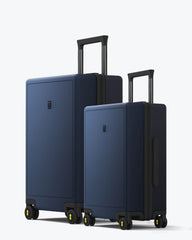
For families or travelers who take trips of different lengths, luggage sets can provide multiple suitcase sizes for different situations. A smaller case can work as a carry-on for short trips, while larger pieces offer additional packing capacity when more items are needed.
Conclusion
Carry-on bags and personal items are both cabin luggage, but airlines treat them differently.
A carry-on bag is the larger piece of luggage stored in the overhead compartment, while a personal item must fit under the seat in front of you.
Most airlines allow passengers to bring one of each, though specific rules can vary by airline, ticket type, and aircraft.
FAQ
Can you bring both a carry-on and a personal item?
Yes. Most airlines allow one carry-on bag and one personal item per passenger. The carry-on goes in the overhead bin, and the personal item stays under the seat.
Can a duffel bag be a personal item?
Yes, if it is small enough to fit under the seat. Larger duffel bags are usually considered carry-on luggage.
What happens if your personal item is too big?
If a personal item exceeds the airline’s size expectations, airport staff may treat it as a carry-on bag. If your carry-on allowance is already used, the bag may need to be checked.
Is a backpack considered a personal item or a carry-on?
A backpack can be either. Small backpacks typically count as personal items, while larger travel backpacks may be treated as carry-on luggage depending on their size.

Leave a comment