



Table of Content
What to Pack for a Europe Trip: Complete Travel Essentials

Planning what to pack for a Europe trip starts with knowing your season, route, and travel style. A city break, coastal trip, alpine stop, or multi-country train route can all require different essentials. This Europe trip packing guide starts with the core items most travelers need, from documents and medicine to adapters, walking shoes, and day bags, before moving into seasonal and route-based packing tips.
Core Items to Pack for a Europe Trip
Start with the essentials that affect entry, health, charging, comfort, and daily movement. This section focuses on what to bring first; later sections cover how to arrange these items for easier access during the trip.
Passport, Visas, Travel Insurance, and Payment Cards
Pack these four essentials:
- Passport: Make sure it is valid for at least 3 months after your planned Schengen departure and was issued within the previous 10 years.
- Visas and ETIAS: Check visa rules for every Schengen and non-Schengen country on your route. ETIAS is scheduled to start in the last quarter of 2026, so confirm the latest requirements before departure.
- Travel insurance: Recommended for medical emergencies, cancellations, delays, and lost belongings; required for some visa applicants.
- Payment Cards: Bring a no-fee credit card and an ATM debit card.
Check these items before you pack clothing or route-specific extras, because missing documents, payment access, or insurance coverage can disrupt the whole trip.
Prescription Medicine and Basic Health Items
Pack a full supply of prescription medications in their original packaging with a doctor's note, along with basic over-the-counter remedies like painkillers and stomach meds.
Universal Travel Adapter and Portable Charging Gear
A universal adapter and a small power bank are useful on days when you rely on your phone for maps, train tickets, hotel check-ins, and translation. Bring a multi-plug adapter to handle both mainland Europe and UK outlets, plus a 10,000mAh portable charger to keep your phone alive during long navigation days.
Comfortable Walking Shoes and Layer-Friendly Clothing
Prioritize supportive, well-cushioned footwear to comfortably tackle uneven European cobblestone streets. Pack clothes that can be layered and reworn, such as neutral tops, one light sweater, and a jacket that works for both sightseeing and casual dinners.
Compact Day Bag for City Sightseeing
Bring a lightweight, secure crossbody bag or daypack for daily excursions. Ensure it has sturdy zippers to deter pickpockets in crowded tourist areas, with just enough space for your daily essentials like water, an umbrella, and electronics.
What to Pack for Europe by Season
Use this seasonal Europe packing list after your core essentials are ready. Weather can vary by country, so choose flexible items instead of packing too much.
Spring Rain and Museum Hopping
Pack for rapid temperature shifts between outdoor chills and heated interiors.
- Layers: Light sweaters for transitioning easily between windy streets and warm museums.
- Waterproof shell: A lightweight, water-resistant jacket for sudden showers.
- Compact umbrella: Easy to stash in your day bag for unexpected rain.
This setup works well for spring city breaks, especially when you move between outdoor streets, cafés, museums, and train stations on the same day.
Summer Heat and Cultural Sites
Balance physical comfort with local dress codes during peak travel months.
- Breathable fabrics: Cotton or linen to stay cool while queuing at outdoor ruins.
- Modest cover-ups: A light scarf to cover shoulders and knees in churches.
- Water bottle: Essential for using public drinking fountains on hot days.
These items are especially useful for long sightseeing days that include outdoor queues, religious sites, old towns, and limited shade.
Autumn Mild Days and Chilly Nights
Pack flexible pieces you can easily add or remove when the sun goes down.
- Mid-layers: A T-shirt and sweater combo perfectly handles the day-to-night shift.
- Light jacket: Blocks evening wind without bulking up your day bag.
- Scarf: A small but effective accessory for evening river cruises.
This setup is practical for autumn routes with sunny afternoons, cooler evenings, river walks, outdoor dining, and late train transfers.
Winter Christmas Markets and City Walks
Travel light in freezing temperatures by focusing on space-saving layers.
- Wear the bulk: Wear your heaviest winter coat on the plane to save suitcase space.
- Thermal layers: Quality thermals (like Merino wool) for hours at outdoor markets.
- Accessories: Hats and gloves to block biting wind during long city walks.
This works best for Christmas markets, evening city walks, and long outdoor sightseeing days where warmth matters but suitcase space is limited.

Extra Items for Different Europe Routes
Add only the extras that match your climate, transport, and daily activities, instead of expanding your suitcase for every possible situation.
Southern Europe and Coastal Routes
For Southern Europe, pack for frequent shifts between beaches, old towns, ferries, coastal walks, and religious sites. Swimwear and sandals are useful for seaside stops, while breathable outfits and a light cover-up help you move comfortably from hot streets to churches, historic sites, or casual dinners.
Northern Europe and Cooler City Routes
For Northern Europe, pack for wind, light rain, long walking days, and weather that can change within the same route. A compact rain jacket, closed-toe shoes, and one warm layer work well for city walks, harbor areas, train transfers, and cooler evenings without turning your suitcase into a winter-only setup.
Alpine Towns and Outdoor Stops
Even in mild seasons, mountain towns and outdoor viewpoints can feel cooler than city centers, especially in the morning or evening. Choose grip-friendly shoes, a fleece or warm mid-layer, and sunglasses if your route includes lakes, trails, cable cars, or scenic outdoor stops.
Train Trips and Cross-Border Routes
For train and cross-border routes, keep movement and access in mind:
- Luggage tag: Useful for busy trains and shared storage areas.
- Small lock: Adds security for hostels or luggage storage.
- Document folder: Keeps tickets, IDs, and reservations together.
Keep these items easy to reach so transit and border checks feel smoother.
How to Pack for a Multi-City Europe Trip
A multi-city Europe trip needs a lighter, more organized packing setup. Since you may move between hotels, train stations, and airports often, your luggage should be easy to open, repack, and carry.
Pack for Hotel Changes with Packing Cubes
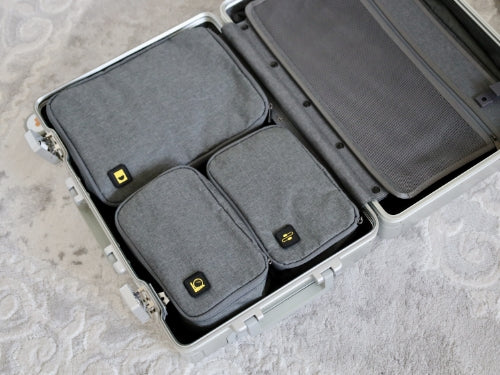
Avoid unpacking your entire suitcase at every stop. Use packing cubes to keep daily outfits, sleepwear, and toiletries in predictable places so you can repack quickly without leaving items behind. To stay organized, try separating your items into specific cubes like this:
- Tops and bottoms: Keep daily outfits easier to find.
- Underwear and socks: Prevent small items from getting lost.
- Seasonal layers: Keep jackets or sweaters easy to reach.
- Dirty laundry: Dedicate one cube for worn clothes so you never mix them with clean ones.
Keeping your items organized this way means you won't need to reorganize the whole suitcase after each overnight stop.
Plan Laundry for Longer Routes
For trips longer than a week, plan one laundry stop instead of packing a fresh outfit for every day. This frees space for weather layers and keeps your suitcase easier to lift during train transfers.
Keep Your Packing Setup Easy to Move
For multi-city routes, compact carry-on luggage, a comfortable day bag, and a simple packing layout make train transfers, stairs, cobblestone streets, and hotel check-ins easier. Mobility matters as much as capacity because you may need to lift your suitcase onto trains, carry it up stairs, or roll it across uneven streets.
Smart Packing Tips for a Europe Trip
Once your essentials are ready, arrange them by how often you need to reach them. Keep daily-use items close, separate liquids from clothing, and use suitcase compartments to make hotel changes, train transfers, and airport screening easier.
Use Compartments to Stay Organized
For a multi-city Europe trip, your suitcase may be opened and repacked several times between hotels, trains, and overnight stays. The LEVEL8 Voyageur Carry-On 20" fits this kind of route because its separate compartments and dry-wet separation pocket help keep clean clothes, toiletries, and worn items from mixing together. This makes it easier to stay organized from city to city.
Keep Essentials Within Reach
Put items you may need in transit in your day bag or an easy-access pocket, not at the bottom of your suitcase. This includes documents, charging gear, basic medicine, and small valuables used during flights, train rides, hotel check-ins, and city walks.
Separate Liquids for Airport Security
Keep travel-sized toiletries in a clear, easy-to-remove bag and place them where you can reach them quickly at security. This saves time at airport screening and helps prevent leaks from spreading into clothing or electronics.
Prepare a Small Overnight Setup
For late arrivals, early trains, or one-night hotel stays, keep a small overnight set near the top of your suitcase. Sleepwear, basic toiletries, one outfit, and charging items should be easy to pull out without unpacking everything.
FAQ
How Many Outfits Should I Pack for a 10-Day Europe Trip?
For a 10-day Europe trip, many travelers can manage with 5 to 7 coordinated outfits if they plan to rewear layers or do laundry once. Pack fewer shoes and choose pieces that work for both daytime sightseeing and casual dinners.
Can I Travel Around Europe With Only a Carry-On?
Yes. Carry-on-only travel can work well for city-based or multi-city Europe trips, especially when you pack versatile clothing and plan laundry. Before departure, check the cabin bag size and weight limits for every airline on your route, since European carriers can apply different allowances. If you are unsure whether carry-on-only travel is enough, review the difference between carry-on and check-in before you pack.
Should I Leave Extra Space in My Suitcase for Europe?
Yes, leave some extra suitcase space for souvenirs, shopping, snacks, or extra layers you may buy during the trip. A tightly packed suitcase is harder to manage when you move between cities, and it leaves no room for small items picked up along the way.
Do I Need a Travel Adapter for Every European Country?
You may not need a separate adapter for every country, but you should confirm plug compatibility for each destination on your route. Many continental European destinations use Type C or F outlets, while the UK and Ireland commonly use Type G, and some countries may require different compatibility. Also check whether your appliances support local voltage.
What Size Suitcase Is Best for a Europe Trip?
A compact carry-on is often easier to manage on short or multi-city Europe trips because you may encounter train platforms, stairs, narrow hotel entrances, and uneven streets. However, the best suitcase size depends on your airline limits, season, trip length, and whether your route includes low-cost carriers with stricter cabin bag rules. For a more luggage-focused comparison, see this guide to European travel luggage.
Conclusion
Packing for Europe is easier when you start with the essentials, then adjust for your season, route, and travel style. Focus on documents, medicine, charging gear, walking comfort, and a practical day bag first. After that, add only the clothing and extras that match your weather, city plans, and transportation. The best setup keeps your essentials organized, your bag easy to lift, and your route flexible. For travelers comparing durable luggage options before a Europe trip, LEVEL8 can be a useful brand to review.

Leave a comment